
REVIEW · MOUNT ETNA HIKING TOURS
Mount Etna: Hike to The Highest Point With a Guide
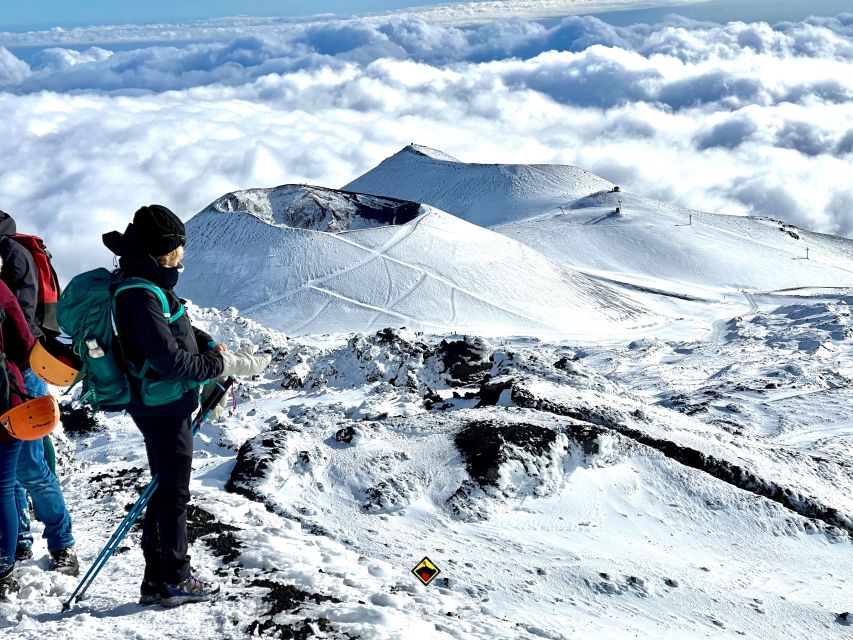
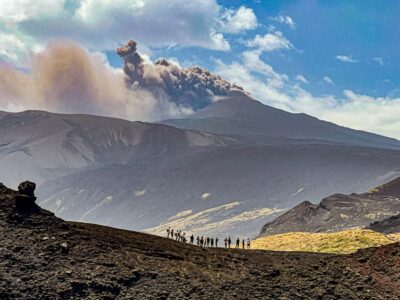
Etna makes you work for the view. This five-hour high-altitude trek takes you from Rifugio Sapienza at 1,900 meters to about 3,000 meters, where you walk among black lava, steaming vents, snow, wind, and wide Sicilian views. I especially like the licensed volcanology guide and the chance to reach areas most casual visitors never see. I also like that helmets, poles, shoes, warm jackets, backpacks, entry fees, and accident insurance are included. The catch is the extra €52 cable car ticket, plus the fact that this is a serious mountain walk, not a gentle sightseeing outing.
The guides make much of the difference. Vincenzo is praised for his humor, care, and clear explanations, while Andrea Montemagno handled English and Italian well for one small group. Nikos also earned strong marks for watching the group closely in hard wind and rough ground. Conditions can change quickly, so your route and final height depend on the volcano, the weather, and how the group is coping.
The five details I would keep in mind
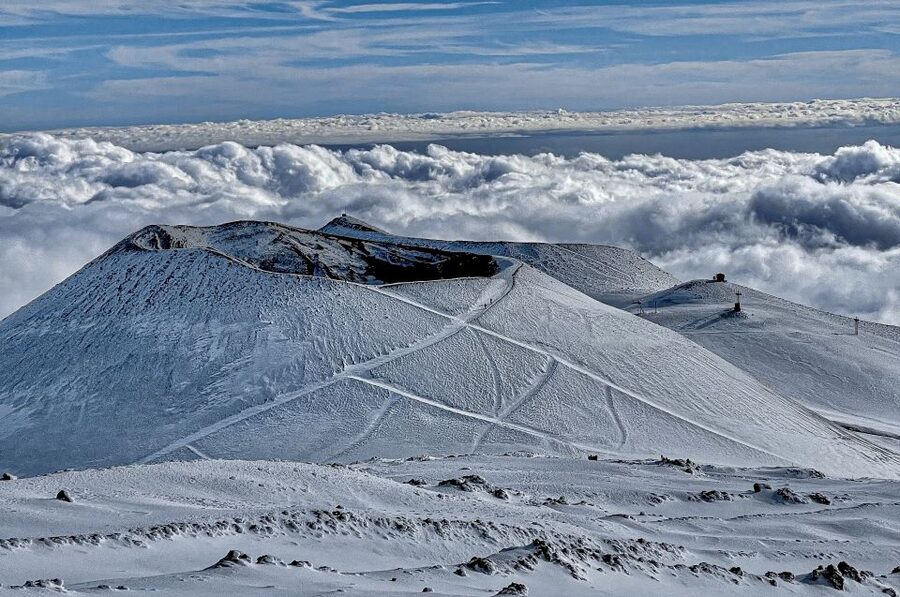
- 3,000-meter goal: Special authorization may allow the group above the normal 2,750-meter limit, but only when conditions and group health permit.
- Cable car cost: The €52 return ticket is paid separately, making the real cost about €117 per person before food or transport.
- Active volcanic ground: You pass fumaroles, recent lava flows, the Southeast Crater area, and the 2002 craters.
- Mountain gear supplied: Trekking poles, helmets, warm jackets, trekking shoes, backpacks, insurance, and the Etna entry fee are included.
- Winter means snow and ice: Snowshoes can cost another €15 when deep snow requires them, and gloves and hats are not supplied.
- Best for fit hikers: Crater edges, loose shale, wind, thin air, and steep sections demand balance and stamina.
Starting at 1,900 meters near Rifugio Sapienza
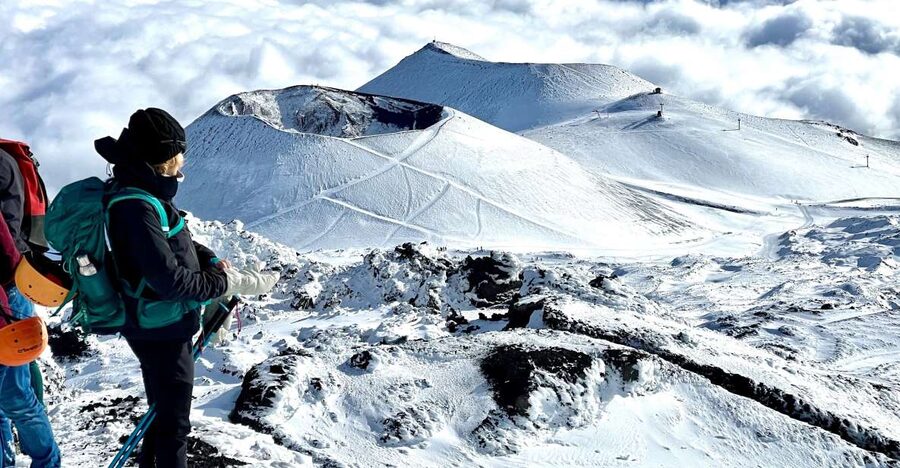
You meet the guides in the parking area in front of Bar Esagonal, near Etna Alpine Guides Excursions. This is at about 1,900 meters, so you begin high above the Sicilian coast before taking a single step toward the upper craters.
The first stage is a transfer of about 20 minutes. The key practical point is that you do not simply arrive and start hiking. You first need to arrange the return cable car ticket at the Funivia dell’Etna office. The guide assists with this purchase, and the ticket is not included in the advertised activity price.
That extra payment changes the value calculation. At $65 for the guided portion, the tour is fairly priced for the guide, safety equipment, insurance, and supplied gear. Add €52 for the cable car and the outing becomes a larger spend, but still a sensible choice if you want structured access to the upper mountain rather than a short walk around the lower craters.
The group normally needs at least eight participants for the outing to run. One account describes a group of about ten, while another found a group of twenty, so do not book expecting a guaranteed tiny party. Group size affects your pace, waiting time, and how much direct attention you receive from the guide.
More Mountain and Summit Hikes in Italy
- Mount Etna: Summit Guided Hiking Tour up to 3,400 m
★ 4.8 · 4,792 reviews - Catania: Mount Etna Trekking Tour Beyond the Tourist Trails
★ 4.9 · 1,596 reviews - Mount Etna: Summit Trekking Tour
★ 4.9 · 347 reviews
The cable car to 2,500 meters
The cable car carries you from roughly 1,900 to 2,500 meters. This is not just a convenient lift. It saves a large amount of climbing and places you directly into the high volcanic zone, where the air is thinner and the weather can be far colder than at the coast.
After leaving the cable car, you begin the trek across dark basalt and volcanic ash. The ground can feel odd underfoot: firm lava in one place, loose black grit in another, with snow or ice covering sections in winter. Trekking poles are useful here, especially on descents.
The guide controls the pace and stops to explain the volcano. Several accounts praise Vincenzo for combining geology with jokes and practical care. That matters at altitude. Regular pauses give you time to catch your breath, hear the explanation, and avoid rushing into the next steep section.
You should not confuse a clear day at sea level with good conditions on Etna. The mountain can be cold, windy, and snowy even when Catania or Taormina feels mild. In March, one group found icy and snow-covered ground. Another encountered very strong wind near the crater ridge. Bring layers, long trousers, sunglasses, sunscreen, a windbreaker, gloves, and a hat.
Reaching the 3,000-meter limit
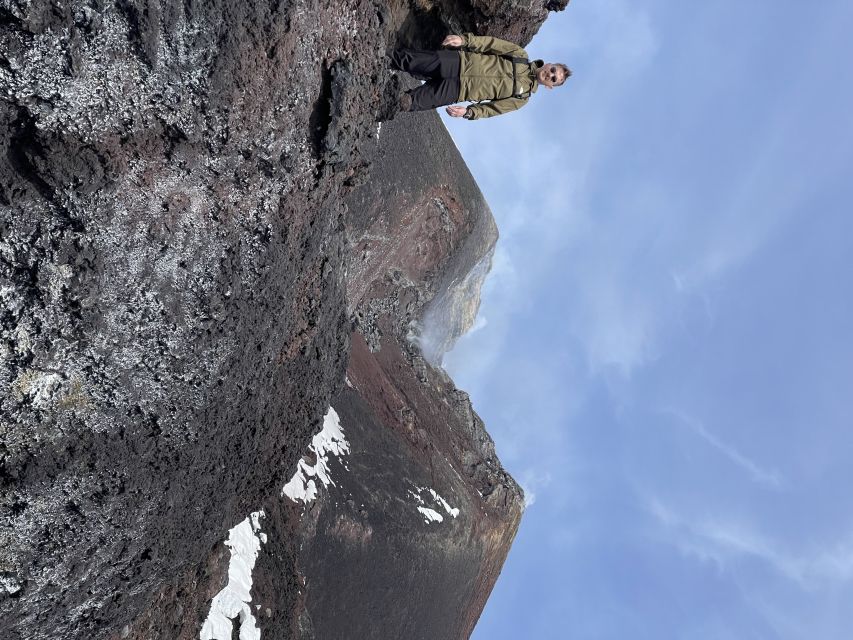
The main goal is to reach approximately 3,000 meters, above the usual altitude limit of 2,750 meters. The description refers to special authorization for scientific purposes, but this is not a promise that every departure will reach that height.
The guide decides based on volcanic activity, weather, official restrictions, and the condition of the group. If someone begins to show serious altitude sickness, the group may not continue to the full height. That is a sensible rule on an active volcano, even if it means the advertised high point is sometimes out of reach.
At 3,000 meters, the experience is physically demanding in a quiet way. You may not be sprinting uphill, but every step can require more effort. The air is thinner, the wind stronger, and loose volcanic grit makes climbing less efficient. One account calculated about 7.5 kilometers and around 760 meters of total ascent and descent. That gives you a better sense of the day than the five-hour duration alone.
The route can include walks along crater edges. If heights make you dizzy, this is not the right excursion. Narrow paths, steep ground, snow, ice, and wind all appear in the experience accounts, so you need steady balance and a reasonable level of fitness.
Fumaroles and hot volcanic rock
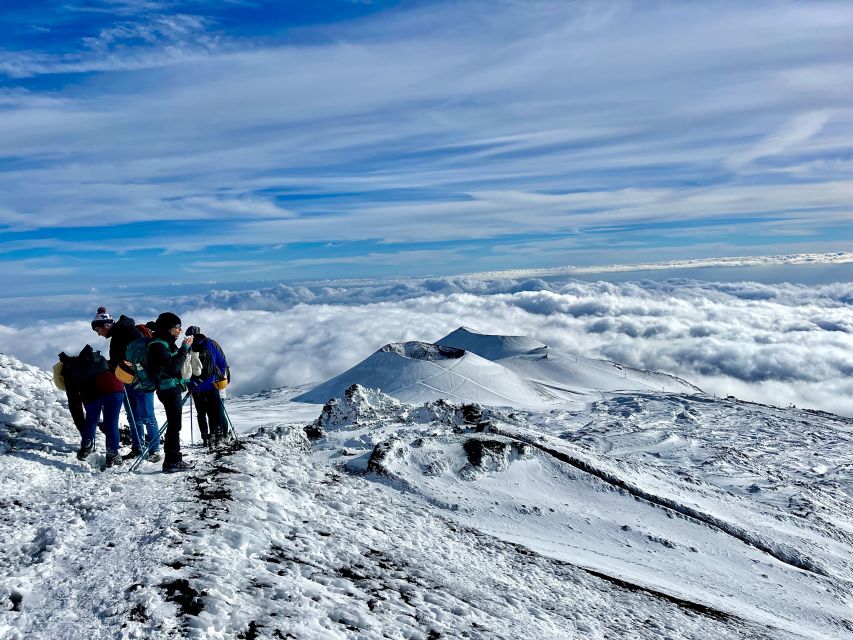
The most unusual part of the walk is getting close to fumaroles. These openings release hot gases from underground, giving you a direct sign that Etna is still active beneath your feet.
You may touch areas of hot volcanic rock near the gas emissions, but this is not a place for casual wandering. Stay close to the guide and follow instructions. Volcanic gases and unstable ground are the reason access rules change, and the route avoids the highest-risk areas.
You also pass the banks of still-steaming lava from recent eruptions. This is where the experience becomes more than a mountain hike. You are not only looking at old black rock. You are seeing how a recent eruption altered the upper slopes, leaving behind ridges, channels, and heat.
The descriptions of hot rocks and steam should not lead you to expect a constant wall of fire. Much of the walk is a stark, quiet trek across ash, basalt, and snow. The appeal is the contrast: one patch may be cold and wind-scoured, while another releases heat from below.
More Volcano Hikes in Italy
- Etna: summit craters trekking with volcano guide 3350mt
★ 4.7 · 1,712 reviews - Mount Etna: scenic Summit Trek with a volcano Guide and Gear
★ 4.5 · 284 reviews - Mount Etna: Half-Day Guided Tour and Hike
★ 4.4 · 264 reviews - Mount Etna: Craters of the 2002 Eruption Trekking Experience
★ 4.8 · 237 reviews
The small basalt canyon and Barbagallo Crater
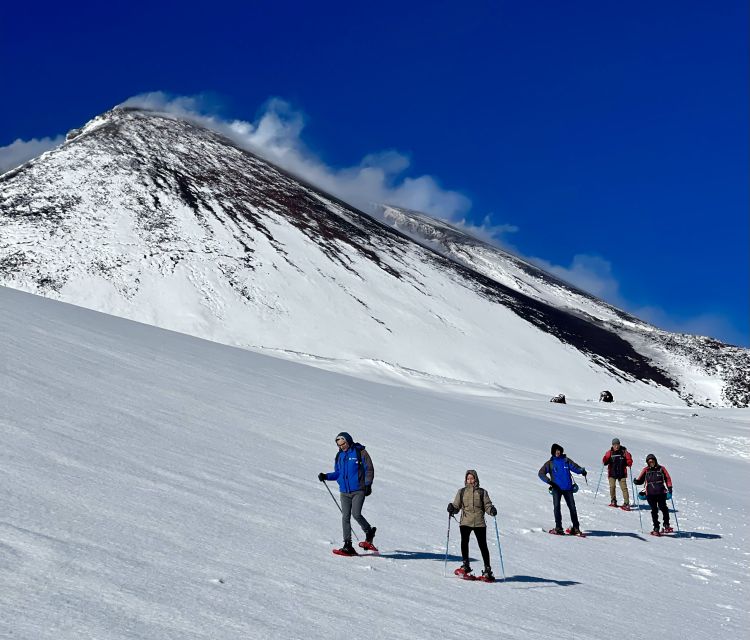
A small basalt canyon is included when it is not buried under snow. Its availability depends on the season and recent conditions, so treat it as a possible stop rather than a guarantee.
The itinerary also identifies Barbagallo Crater as a major guided section, lasting roughly two hours and twenty minutes. This gives the guide time to explain the crater’s form, nearby lava, and the way eruptions reshape the mountain. The dark volcanic rock is visually stark, especially against snow or a bright sky.
This section is likely to be the heart of the walk for anyone interested in geology. You get time to look closely rather than simply stop for a photograph. The guide’s explanations are a major part of the value, particularly when they connect the ground under your boots with actual eruptive activity.
Still, the crater route can be tiring. Loose ash is harder to walk on than a firm trail, and descending steep volcanic grit requires care. One account specifically noted that the steepest sandy shale descent took concentration, with the descent harder on the knees than expected.
Southeast Crater and the 2002 craters
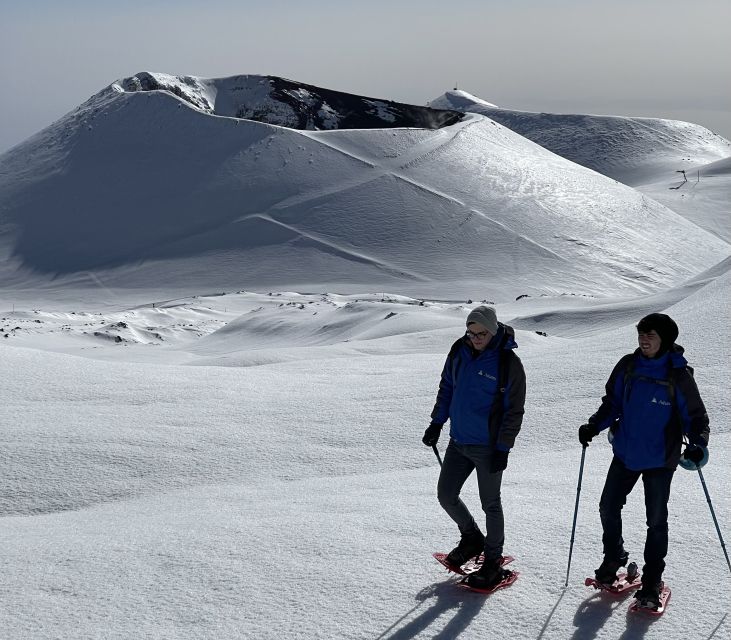
The route continues toward the base of the most active crater at the time of the excursion, identified as the Southeast Crater. The wording matters: volcanic activity can change, and the exact access point is subject to current rules.
You do not climb into a forbidden high-risk zone. Instead, the guide brings you to a permitted position near the crater and explains what you are seeing. This is a safer way to approach Etna’s active side while still giving you a close view of the volcano’s power.
Next come the large craters formed in 2002. Recent eruptions are not an abstract part of Etna’s past here. They shape the route, the views, and the explanations you receive. You can see the physical effects of an eruption in the form of new crater rims and fresh-looking lava, while the guide provides the wider volcanic context.
There is also time for a photo stop and a short break. Do not underestimate the value of this pause. At high altitude, you will want time to drink, eat a snack, adjust layers, and take in the view without trying to walk and photograph at the same time.
The descent through snow, ash, and wind
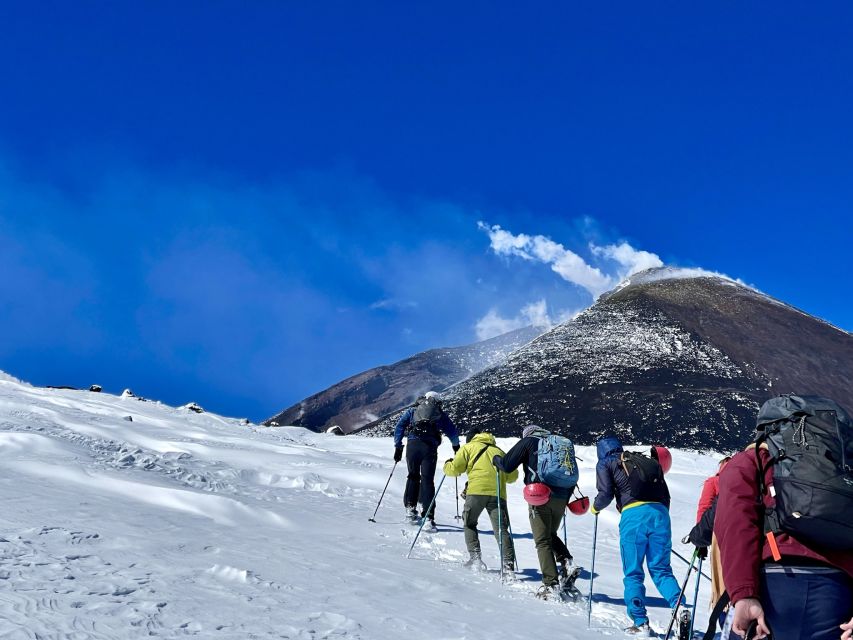
The return is not simply the uphill walk in reverse. From the upper craters, you descend toward the cable car station, with the route often covered by snow in winter.
A downhill section on loose volcanic grit can be harder than the climb. Poles help, and proper trekking shoes are essential. The provider warns that insurance will not cover you if you arrive without suitable footwear, so do not treat trainers, sandals, or casual shoes as good enough.
Winter conditions can add snowshoes to the cost, at €15 per person when deep snow requires them. The guides supply trekking shoes and warm jackets, but you should still bring your own hiking shoes if you have them, plus a change of clothes. Gloves and hats are not included.
Once you reach the cable car station, you return to the starting area. The excursion includes a transfer connected with Valle del Bove, shown as about 20 minutes, before arriving back at Etna Alpine Guides Excursions. The full day is listed as five hours, though weather, queues, group pace, and mountain controls can affect the rhythm.
What the guides add to the experience
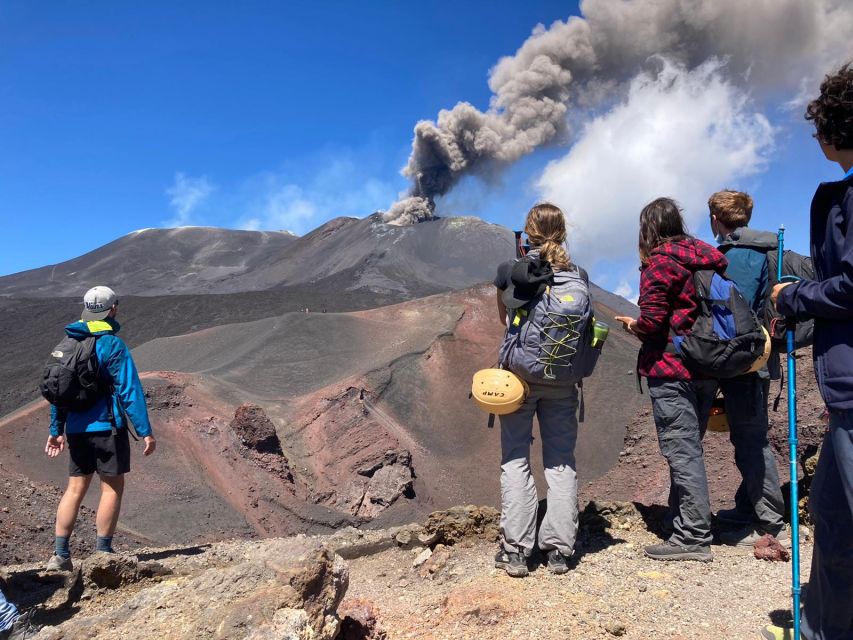
The strongest part of this outing is the human guidance. Vincenzo receives repeated praise for being funny, patient, and careful while explaining Etna in an accessible way. Andrea Montemagno is noted for giving explanations in both English and Italian. Nikos is praised for maintaining a steady pace and looking after people during strong wind and difficult terrain.
The guides also provide a practical safety net. They carry helmets, poles, and other equipment, and they adjust the route to official restrictions. The excursion is available in English, Italian, and French.
That said, do not expect the guide to remove every hard part. Several accounts describe the route as tougher than expected, especially in snow, ice, wind, and loose ash. A guide makes the walk safer and more informative, but your own footwear, fitness, and judgment still matter.
Is the €65 price good value?
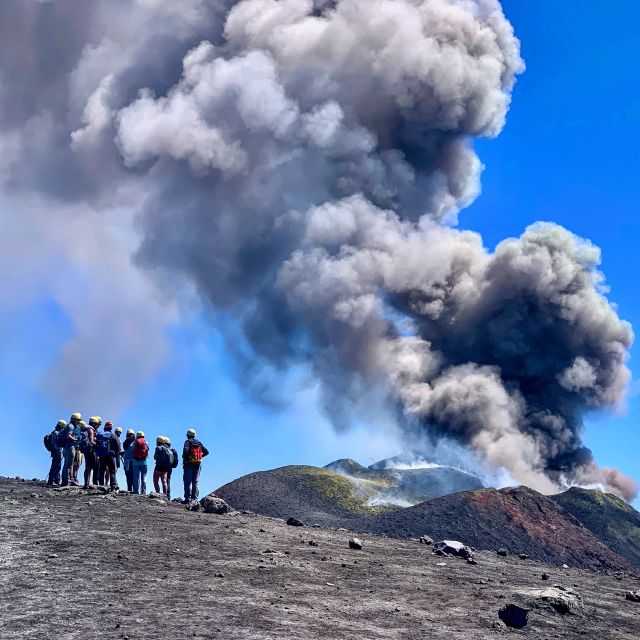
The $65 activity price is attractive for a specialist guided hike, especially with helmets, poles, warm jackets, trekking shoes, backpack, accident insurance, the Etna entry fee, and the guide included.
The cable car ticket is the major extra. At €52 per person, it can make the total cost feel closer to a standard premium half-day excursion. Snowshoes, food, drinks, and transport from your accommodation also cost extra.
I still think the package offers good value if you specifically want to reach the high slopes with a volcanology guide. You are paying for route control, equipment, explanations, and access to terrain that requires care. It is less attractive if you only want a simple view of Etna or a short volcanic walk.
Transport is another point to plan. The meeting point is at Rifugio Sapienza, and one account found the location difficult to reach without a taxi. The drive from Syracuse was said to take about an hour, with shorter access from Catania or Taormina. Transport from your accommodation is not included.
Who should book this Etna hike?
I would choose this tour if you are fit, comfortable on uneven mountain ground, and excited by active geology. It suits people who want more than a cable car viewpoint and who are happy to trade comfort for a close look at fumaroles, lava flows, and crater rims.
It is not suitable for children under 12, people with heart, respiratory, back, or mobility problems, or anyone with vertigo, epilepsy, high blood pressure, recent surgery, or a low fitness level. The published information also says the trek is for trained hikers and not for people without experience.
The age information is slightly inconsistent in the supplied guidance, which refers both to children under 11 and children under 12. The safer interpretation is to treat the minimum age as 12 and confirm it when booking.
The walk can be done by older hikers with reasonable fitness. One couple in their late fifties completed it, despite snow and difficult ground. But you need honest self-assessment. This is not a good place to discover that your hiking boots are worn out or that you dislike heights.
Should you book Mount Etna’s high-altitude hike?
Book it if you want an active, guided encounter with Etna rather than a quick scenic stop. The best reasons are the skilled guides, close views of fumaroles and recent lava, the chance to reach about 3,000 meters, and the useful safety equipment.
Skip it if you want an easy outing, dislike wind and cold, or need a fixed route and guaranteed summit access. The height, volcanic activity, group condition, and weather can change the plan.
For the best chance of enjoying it, bring sturdy shoes, long trousers, gloves, a warm hat, layered clothing, water, and snacks. Budget for the cable car before you book. If you accept the hard parts, this is a memorable way to feel Etna as a living volcano rather than merely look at it from below.
FAQ
Where does the Mount Etna hike meet?
The guides meet you in the parking area in front of Bar Esagonal at Rifugio Sapienza, near 1,900 meters.
How long does the excursion last?
The activity lasts about five hours, including the cable car, guided walking, breaks, and the return to the starting area.
How high does the hike go?
The route can reach approximately 3,000 meters, above the usual 2,750-meter limit, when authorization, weather, volcanic conditions, and group health allow it.
Is the cable car included in the price?
No. The return cable car ticket costs €52 per person and is paid on-site. The guide assists with purchasing it before departure.
What equipment is included?
The activity includes trekking poles, helmets, accident insurance, warm jackets, trekking shoes, backpacks, the Etna entry fee, and a volcanological guide.
Are snowshoes included?
No. Snowshoes may be rented for €15 per person when deep snow requires them.
What should I bring?
Bring a windbreaker, warm jacket, sunglasses, sunscreen, long trousers, comfortable weather-appropriate clothing, snacks, drinks, and a change of clothes. Bring your own gloves and hat because they are not included.
Is the hike available in English?
Yes. The tour is available with live guides in English, Italian, and French.
Can children join the excursion?
Children under 12 are not allowed according to the supplied guidance. The same guidance also describes the trek as unsuitable for people without experience or a low level of fitness.
Can the route change?
Yes. The route follows current volcanic restrictions and can change because of weather, snow, volcanic activity, or the condition of the group. The excursion may also be cancelled if at least eight participants are not reached.
More Mountain and Summit Hikes in Mount Etna
- Mount Etna: Trek to the Craters of The 2002 Eruption
★ 4.9 · 9 reviews - From Taormina or Catania: Private Full-Day Mount Etna Hike
★ 4.5 · 8 reviews - Berber villages : Atlas Mountains Day Hike from Marrakech
★ 5.0 · 14,007 reviews - Bali: Sunrise Mount Batur Guided Hike with Breakfast
★ 4.8 · 9,660 reviews
More Volcano Hikes in Mount Etna
- Piano Provenzana: Mount Etna Hiking Trip to 3,380 Meters
★ 4.8 · 54 reviews - Etna South: High Altitude Winter Trek with an Alpine Guide
★ 4.8 · 27 reviews - Taormina and Catania: Private guided Etna hike by cable car
★ 5.0 · 17 reviews - Mount Etna: Private Half-Day Guided Family-Friendly Hike
★ 5.0 · 11 reviews
Just added around Mount Etna
- Taormina and Catania: Private guided Etna hike by cable car★ 5.0 · 17 reviews
- Piano Provenzana: Mount Etna Hiking Trip to 3,380 Meters★ 4.8 · 54 reviews
- Mount Etna: Trek to the Craters of The 2002 Eruption★ 4.9 · 9 reviews
- Etna South: High Altitude Winter Trek with an Alpine Guide★ 4.8 · 27 reviews
- From Taormina or Catania: Private Full-Day Mount Etna Hike★ 4.5 · 8 reviews
- Mount Etna: Private Half-Day Guided Family-Friendly Hike★ 5.0 · 11 reviews
- Mount Etna: Craters of the 2002 Eruption Trekking Experience★ 4.8 · 237 reviews
- Mount Etna: scenic Summit Trek with a volcano Guide and Gear★ 4.5 · 284 reviews
Mount Etna Hiking Tours, compared.
summit craters trekking with volcano guide 3350mt
Read our review →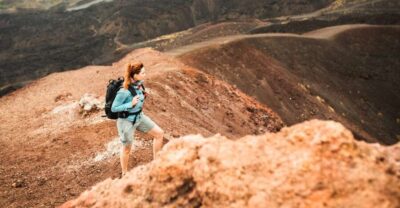
Mount Etna Trekking Tour Beyond the Tourist Trails
Read our review →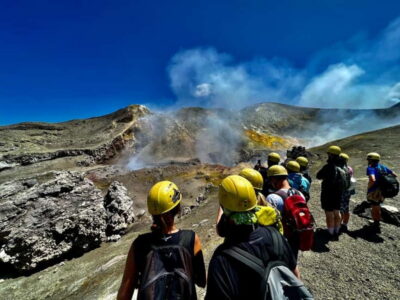
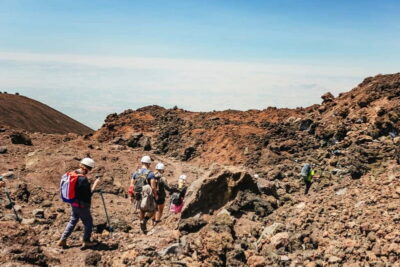
scenic Summit Trek with a volcano Guide and Gear
Read our review →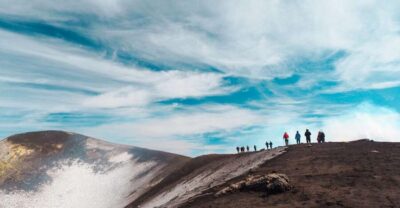
Craters of the 2002 Eruption Trekking Experience
Read our review →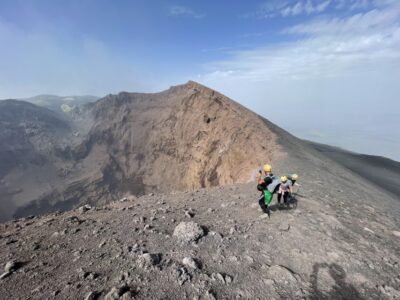
Piano Provenzana: Mount Etna Hiking Trip to 3,380 Meters
Read our review →Browse the lists this tour appears in