
REVIEW · MOUNT ETNA HIKING TOURS
Mount Etna: Craters of the 2002 Eruption Trekking Experience
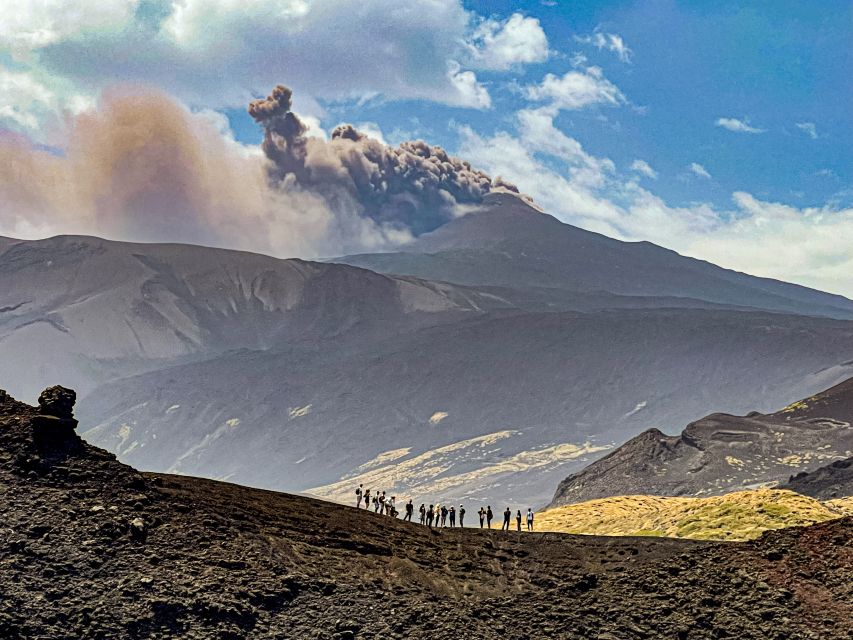
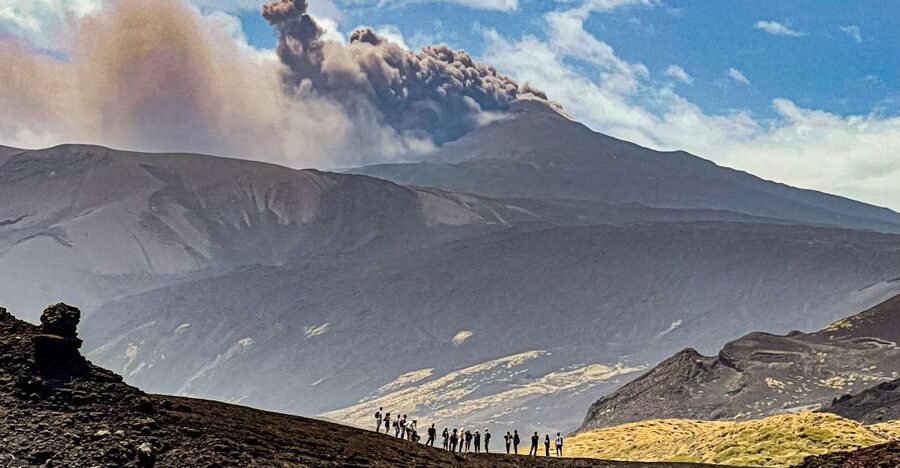
Etna reveals its power in black rock. This three-hour walk on Sicily’s north side takes you through the forests, lava flows, eruptive cracks, and huge craters formed during the 2002 eruption. I like the small-group feel away from Etna’s busiest tourist areas, and I like how the guides turn the walk into a moving lesson in volcanoes rather than a simple photo stop. The main catch is that this is not a flat stroll. You need moderate fitness, steady footing, and clothing for sharp changes in mountain weather.
The $42 price is fair for an official volcano guide and accident insurance, especially if you want to understand what you are seeing. Guides such as Davide, Daniele, Vincenzo, and Niko have earned praise for mixing clear science with humor and personal stories. Still, wind, loose volcanic soil, and crater-edge walking can make the three hours harder than the modest duration suggests.
Quick reasons to consider this Etna walk
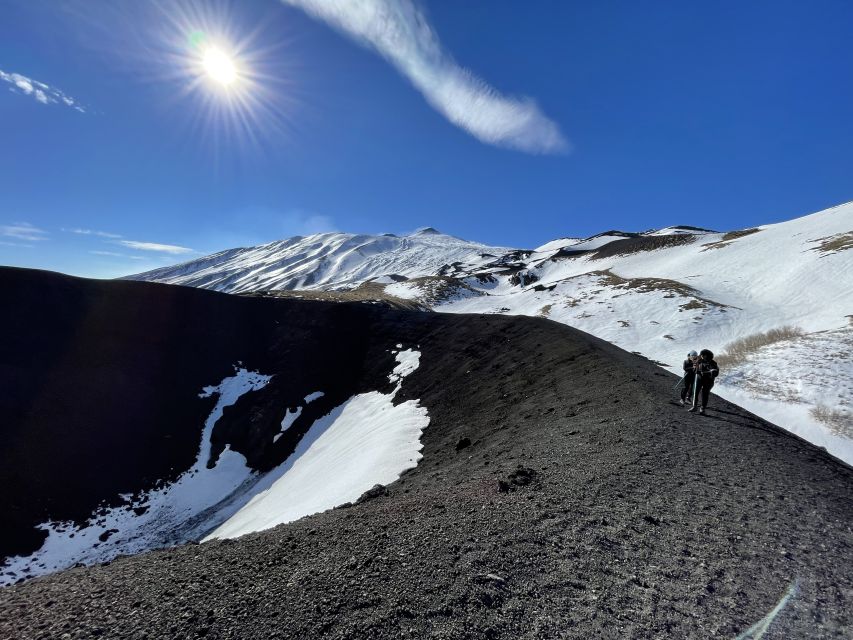
- The 2002 eruption is the focus: You see the lava damage that threatened the area around Linguaglossa and destroyed much of Piano Provenzana.
- The ruined Hotel dell Betulle adds human scale: This is the only visible structure left from the 2002 lava flow.
- Hornitos and the 1911 Bottoniera show different volcanic forms: The route is a useful lesson in how lava and gas shape Etna.
- The views reach beyond the volcano: From the eruptive theater, you may look toward the Calabrian Coast when conditions are clear.
- The walk is short but not effortless: Three hours suits a half-day plan, but loose ground and uphill sections call for hiking shoes.
- Guides are a major part of the value: The best guides explain the geology in several languages and keep the pace together.
Why the north side of Etna feels different
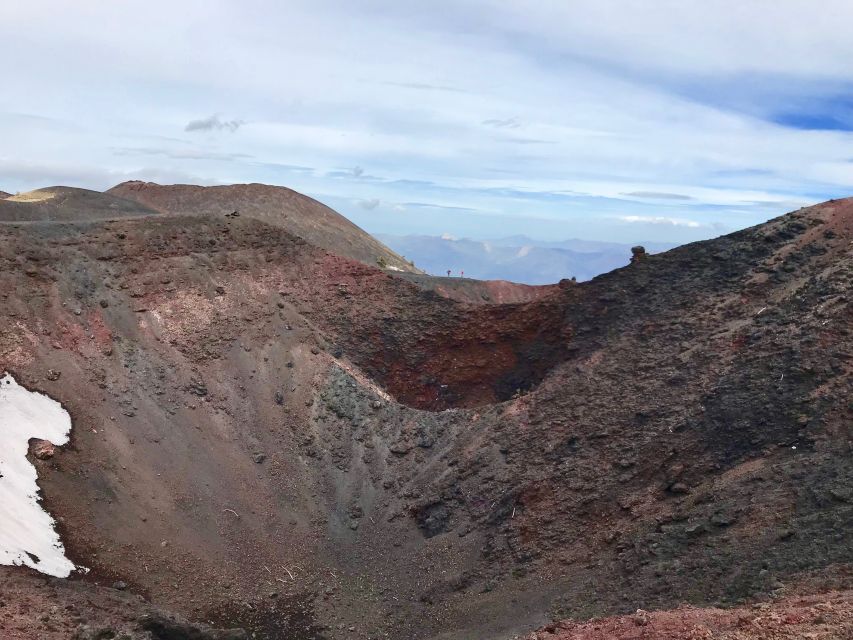
Piano Provenzana gives you a more rugged introduction to Mount Etna than a quick viewpoint or cable-car outing. The north side is marked by dark lava, young cinder cones, forest, and broad open volcanic ground. Here, the volcano feels less like a distant mountain and more like a force that has recently rearranged the land.
The 2002 eruption is central to the experience. It was one of Etna’s most powerful eruptions in recent years, and its lava flows damaged Piano Provenzana. The route lets you see the results directly, not just hear a date and move on.
I find that context valuable because Etna can otherwise become a parade of black rocks and dramatic photographs. A guide helps you read the ground. You learn which shapes came from older flank eruptions, which cracks carried lava, and how cinder cones formed.
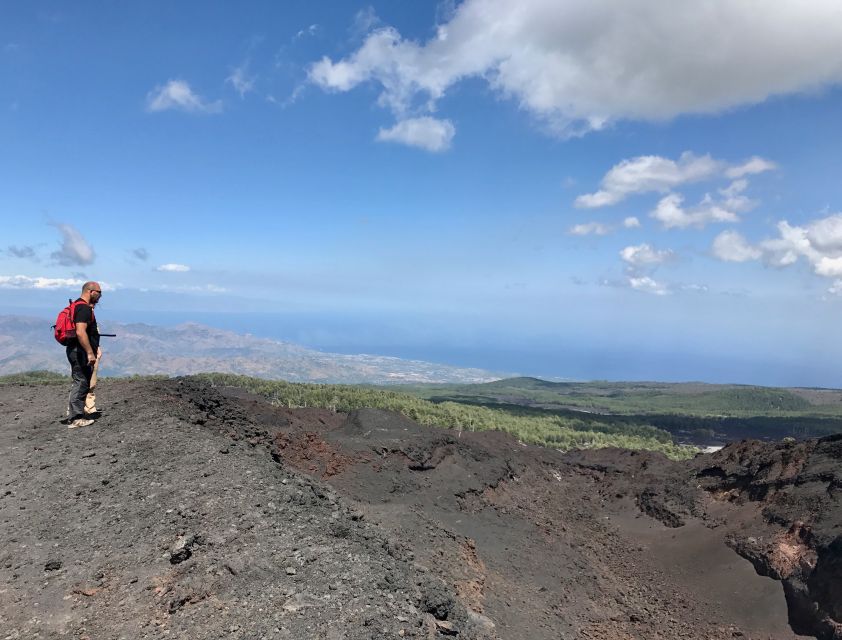
The scenery also changes as you walk. Forest gives way to open volcanic ground, then to the stark edges of the craters. When the air is clear, the view toward the Calabrian Coast adds a wide coastal horizon to the dark volcanic setting. Wind and cloud can limit this, so treat the view as a bonus rather than a promise.
More Mountain and Summit Hikes in Italy
- Mount Etna: Summit Guided Hiking Tour up to 3,400 m
★ 4.8 · 4,792 reviews - Mount Etna: Trek to 3000m with cable car and 4×4
★ 4.6 · 3,823 reviews - Mount Etna: Summit Crater Trek with Cable Car
★ 4.8 · 1,875 reviews
Meeting at Piano Provenzana without confusion
The meeting point is Chiosco Bar Mareneve di Ferraro Giuseppa, near the chairlift used by skiers in winter. It is described as the second house of the four buildings in the parking area. Do not go to Chiosco Bar Etna Nord in the lower parking lot. That distinction matters because the two names are easy to mix up.
The tour begins with about 15 minutes at Guide Vulcanologiche Etna Nord for a safety briefing. This is a useful start, not wasted time. The guide can explain the route, the condition of the volcanic soil, and the need to stay alert around crater edges and unstable ground.
If you drive, allow time for parking and finding the right kiosk. The supplied information gives different parking figures: one note says €5 for a full weekday and €8 on Sundays and public holidays, while another says €3 paid after the excursion. Since these figures conflict, confirm the current amount locally before you arrive.
Transport from your accommodation is not included. You need to reach Piano Provenzana yourself, and you should arrive ready to walk. Trekking shoes, a windbreaker, gloves, hats, food, and water are also your responsibility unless you rent selected items nearby.
The first walk: forest, lava, and the Hotel dell Betulle
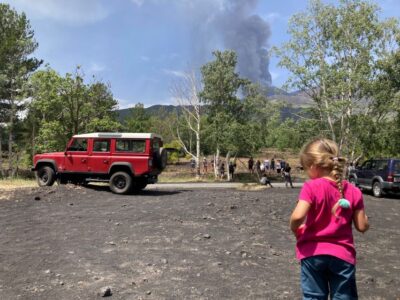
The route follows the dirt road from Piano Provenzana toward the upper craters. It begins in a setting where trees and volcanic rock share the same space. This early section helps you see that Etna is not only a barren cone. The north side includes forest, older lava forms, and fresh-looking volcanic surfaces.
The first major stop is the Hotel dell Betulle, or more precisely, the remains of the hotel buried by the 2002 lava flow. The stop lasts about 10 minutes and includes time for photographs and explanation. The ruined structure gives the eruption a human scale. A lava flow is no longer an abstract geological event when you can see the one building left visible.
This is also a good point to listen closely to the guide’s account of the 2002 activity. The experience is not built around entering a dangerous active crater. Instead, you study the material and forms left by past eruptions while following the guide’s safety instructions.
The dirt road may feel simple at first, but the tour later moves over uneven volcanic ground. Comfortable clothing and proper footwear matter from the beginning. Sandals, flip-flops, slippers, high heels, skirts, and large bags are not allowed.
The Bottoniera del 1911 and Etna’s volcanic shapes
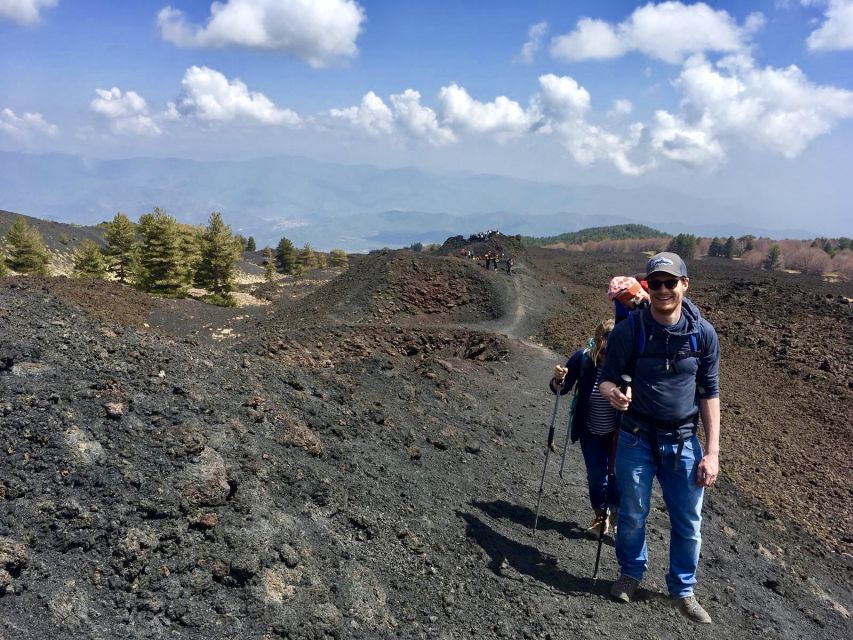
The next stop is the Bottoniera del 1911, reached after roughly 25 minutes of walking and explanation. The name refers to a line of volcanic openings or cones. Here, the guide points out forms connected with Etna’s repeated flank eruptions.
This part rewards curiosity. You are not simply looking at one crater. You are learning how a volcanic area can preserve evidence from different eruptions over time. The north side has seen many such events, and the terrain records those changes in cones, fractures, lava paths, and deposits.
The guide may also introduce hornitos, small cone-like structures formed around openings in a lava field. Their name means little ovens. They are a fine example of how volcanic gas and molten rock can create surprisingly varied shapes.
The stop includes free time, photographs, and walking. That flexibility is useful because everyone does not move at the same speed on loose ground. It also means the overall duration can vary. The stated time is three hours, but the guide may adjust the pace to the group and to weather or volcanic conditions.
More Volcano Hikes in Italy
- Etna: summit craters trekking with volcano guide 3350mt
★ 4.7 · 1,712 reviews - Catania: Mount Etna Trekking Tour Beyond the Tourist Trails
★ 4.9 · 1,596 reviews - Mount Etna: Guided Trek 3,000 Meters to the Summit
★ 4.8 · 1,407 reviews - Etna Sunset Tour: Volcano trek, Cave & tasting from Catania
★ 4.8 · 1,290 reviews
The 2002 Fire Belt is the heart of the tour
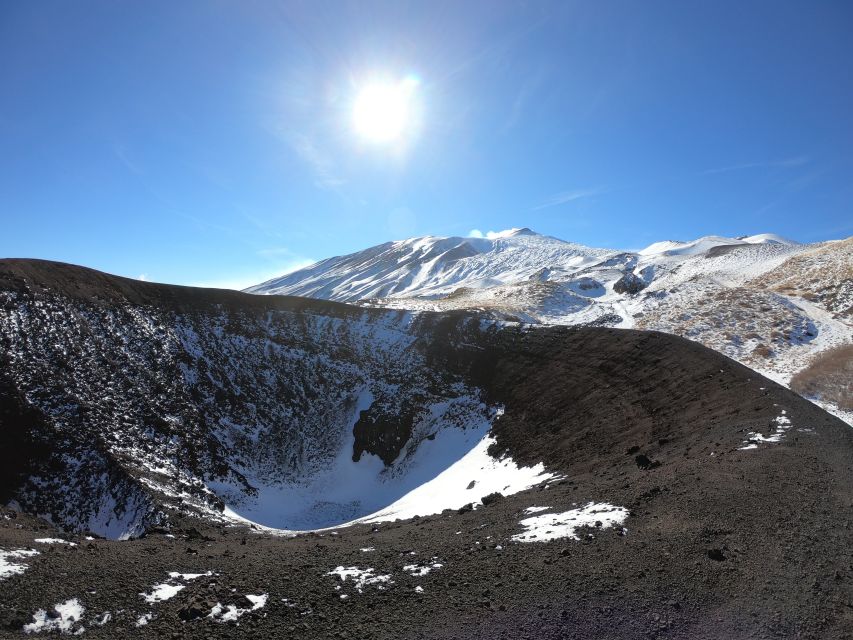
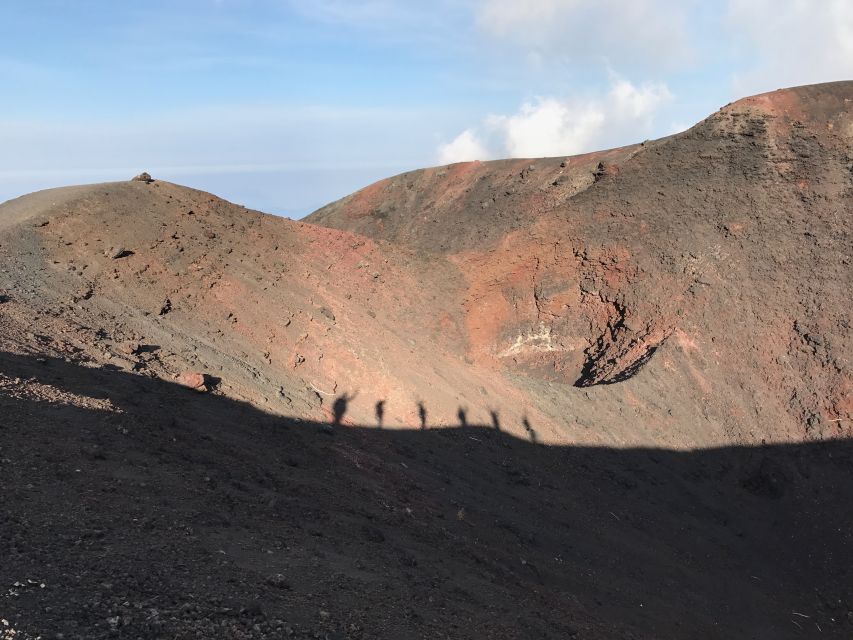
The longest section, about an hour and a half, takes you to the Cerniera di Fuoco 2002, or 2002 Fire Belt. This is the main reason to choose this excursion. You see lava streams, eruptive fractures, cinder cones, and the large craters tied to the eruption that affected Piano Provenzana.
The route includes climbing cinder cones and walking along crater edges. From the upper ground, you can look into the craters and study the shape of the eruptive theater. The final return follows a sandy channel down toward the starting point, giving the walk a different feel from the ascent.
This section is scenic, but it is also where the physical demands become clearest. Volcanic soil can shift underfoot, and the route is not suitable for someone who avoids regular physical activity. One British participant in their late sixties found the three hours hard but worthwhile, which is a useful warning: age is not the deciding factor, but your walking condition matters.
Walking poles can help. One review specifically recommended using the poles offered, and the supplied information notes that trekking sticks are not included. Ask about them before setting off rather than waiting until the ground becomes awkward.
You should also expect exposure to wind. A spring participant found the conditions too windy, and several other accounts highlight the need for jackets. Even when the weather feels mild at lower elevations, Etna’s upper slopes can be colder and more exposed.
What the guides add to the experience
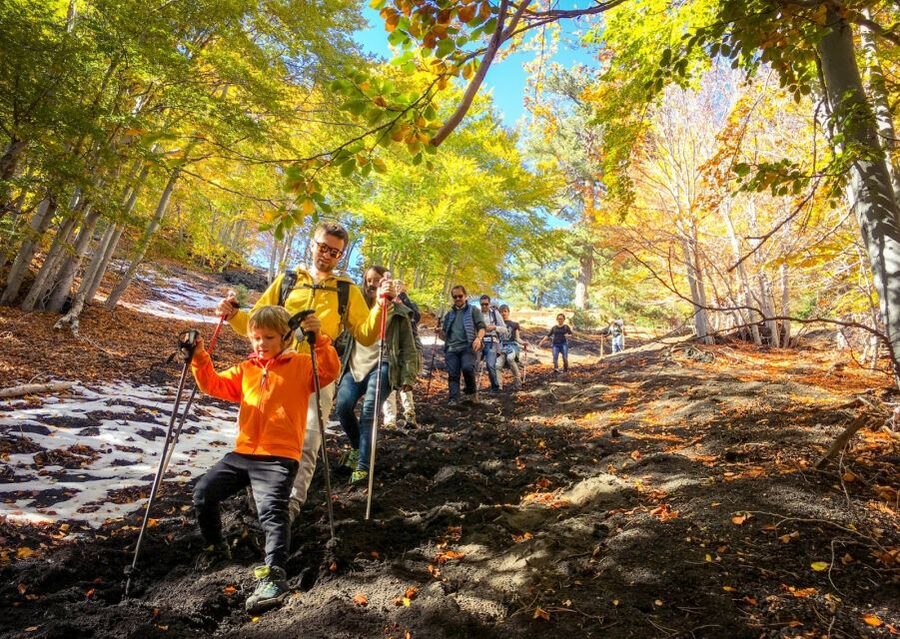
The guide is the difference between a scenic hike and a useful volcanic excursion. The tour is offered in Italian, French, and English, and several guides have received especially warm praise.
Davide has been described as engaging and funny, using humor to keep the explanations lively. Daniele is praised for being helpful, clear, and well prepared. Vincenzo has led the route in French and is noted for combining careful teaching with an easy manner. Niko is particularly valued for his experience with volcanoes and Etna.
One guide used personal videos and photographs from the actual eruption to explain what happened. That sort of material can make the black rock in front of you easier to understand. Another guide reportedly drew diagrams in the dust to answer questions. These small teaching moments are often more memorable than a long formal lecture.
The guides also help with pace and safety. The group must wait for slower walkers, and the route can be changed or stopped if environmental, weather, or volcanic conditions make that necessary. That flexibility is important on an active volcano. A fixed route matters less than a safe one.
How difficult is the three-hour trek?
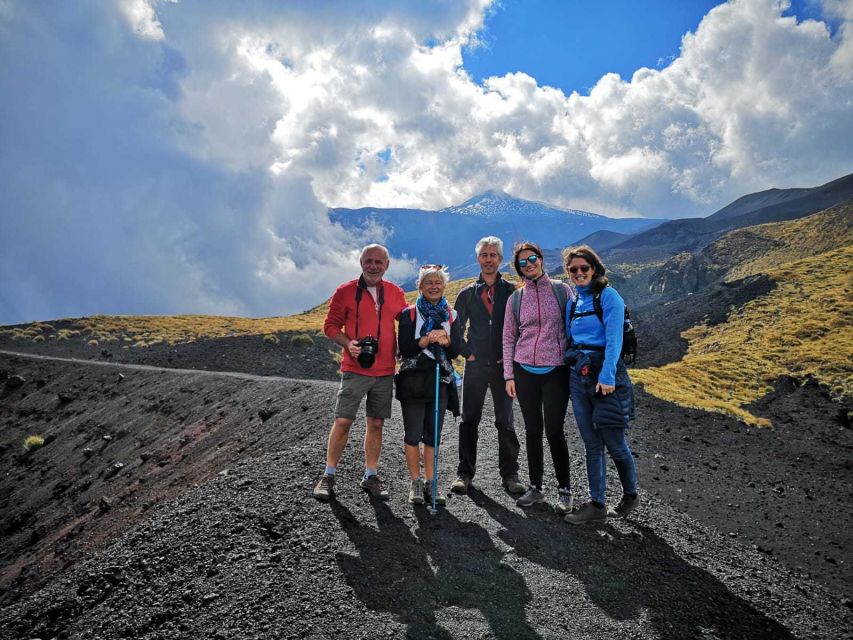
The tour is marketed as suitable for people with medium training, but do not confuse short with easy. You walk uphill, cross uneven volcanic surfaces, climb cinder cones, follow crater edges, and descend through a sandy channel. Loose ground can make a simple incline tiring.
I would describe it as a moderate half-day hike rather than a casual nature walk. You should be comfortable walking for several hours and standing on uneven ground. People who do not exercise regularly may find it too demanding.
The route is not suitable for children under six, pregnant women, people with mobility, heart, back, respiratory, or epilepsy issues, or anyone with vertigo or a strong fear of heights. The crater edges can cause dizziness for susceptible people.
The experience also depends on the group. The minimum is four participants, and the total time changes with the general pace. In favorable conditions, the pauses make the walk manageable. In wind, snow, or poor weather, the same route can feel much tougher.
What to wear and bring to Etna
Good footwear is essential. Bring hiking shoes with a firm sole. Shoes can be rented from authorized local providers for €5 per pair, but you should not rely on ordinary trainers if you want secure footing. The insurance does not cover you if you arrive without adequate shoes.
A windbreaker is another priority. It can be rented locally for €5, but packing your own is simpler. In winter, spring, and autumn, bring gloves and a hat. If snow is present during December, January, February, or March, snowshoes are recommended and can be rented for €12 per person.
Pack water, snacks, sunscreen, sunglasses, a jacket, and a small daypack. Large bags and luggage are not allowed, so keep your load light. Comfortable, weather-appropriate clothing is more useful than looking stylish here. Etna is not the place for city shoes and a thin cotton top.
The tour includes accident insurance, but that does not replace sensible preparation. Proper shoes, attention to the guide, and steady pacing are part of staying safe.
Is $42 good value?
At $42 per person, this is a solid value if you want interpretation rather than independent walking. The price includes an official volcano guide and accident insurance. It does not include transport, parking, food, water, shoe rental, windbreaker rental, trekking sticks, or snowshoes.
The add-ons can raise your actual cost. A visitor who needs shoes, a windbreaker, and snowshoes could spend considerably more. Parking also needs checking because the supplied figures vary. Bring your own gear when possible.
Still, the guide is doing more than leading you from one viewpoint to another. You receive explanations of the 1911 and 2002 formations, help with crater-edge safety, and a structured way to understand the north side. For a three-hour introduction, that is a reasonable use of money.
The tour also works well when your Sicily schedule is tight. It gives you a real Etna walk without committing an entire day to a longer and harder route. One participant chose this lighter trail on the final day in Sicily for exactly that reason.
Who should book this Etna experience?
You should consider it if you want to see the evidence of the 2002 eruption, prefer a guided walk to independent sightseeing, or have only half a day available. It suits adults and older walkers who are fit enough for uneven ground and who are happy to take the route at a measured pace.
It is also a good choice for anyone who wants the science explained in English, French, or Italian. The guides are repeatedly praised for clear explanations, humor, and care with the group. That is the strongest part of the experience.
You should choose something else if you want a flat walk, a fully accessible route, or a simple viewpoint reached with almost no effort. You should also think twice if high winds, crater edges, loose soil, or mountain weather make you uncomfortable.
Book with enough flexibility for weather and volcanic conditions. Free cancellation is available up to 24 hours before the start, and you can reserve now and pay later. The activity requires at least four participants, so check availability for your preferred time.
My verdict: a worthwhile half-day on Mount Etna
I would recommend this trek to a reasonably fit visitor who wants to understand Etna’s recent eruptions rather than simply photograph the mountain. The destroyed hotel, the Bottoniera del 1911, the hornitos, and the 2002 Fire Belt create a clear story as you walk.
The main warning is practical: bring proper shoes, warm layers, water, and patience for wind and uneven ground. If you do, the $42 price gives you a focused, well-explained look at one of Etna’s most dramatic areas, with enough time left in the day for another Sicilian adventure.
FAQ
How long does the Mount Etna crater trek last?
The stated duration is three hours. The exact time can change depending on the group’s pace and the environmental, weather, or volcanic conditions.
Where does the excursion meet?
Meet at Chiosco Bar Mareneve di Ferraro Giuseppa near the winter chairlift. It is the second house of the four buildings in the parking area.
Is Chiosco Bar Mareneve the same as Chiosco Bar Etna Nord?
No. You should go to Chiosco Bar Mareneve, not Chiosco Bar Etna Nord in the lower parking lot.
What languages does the guide speak?
The tour is offered in Italian, French, and English.
Does the price include a volcano guide?
Yes. The price includes an official Volcano Guide and accident insurance.
Are hiking shoes included?
No. Trekking shoes are not included. Authorized local rentals offer them for €5 per pair, and adequate footwear is required for insurance coverage.
Do I need snowshoes in winter?
If there is snow, snowshoes are recommended during December, January, February, and March. They can be rented on-site for €12 per person.
Is the trek suitable for children?
Children under six are not permitted. The route also requires moderate fitness and is not recommended for people who do not take part in regular physical activity.
Can the tour be canceled or changed because of weather?
Yes. Guides may change or interrupt the excursion because of environmental, climatic, or volcanic conditions. You can cancel up to 24 hours in advance for a full refund.
Just added around Italy
- From Catania: Mount Etna Trekking Private Experience★ 4.6 · 11 reviews
- From Cala Gonone: Gorropu hiking with lunch★ 4.8 · 46 reviews
- Florence: Hiking Tuscany & Chianti wine 3 wineries and lunch★ 5.0 · 9 reviews
- Explore the Dolomites, a hiking day in the mountains★ 5.0 · 8 reviews
- Etna: Trekking to the summit craters at 3340 meters★ 4.0 · 10 reviews
- Etna: hiking to a stunning viewpoint over Valle del Bove★ 4.8 · 22 reviews
- Etna: Summit Area Guided Hike from Cable Car Station★ 4.8 · 36 reviews
- Catania: Etna Morning or Sunset Trek with Lava Tunnel & Gear★ 5.0 · 27 reviews
Mount Etna Hiking Tours, compared.
summit craters trekking with volcano guide 3350mt
Read our review →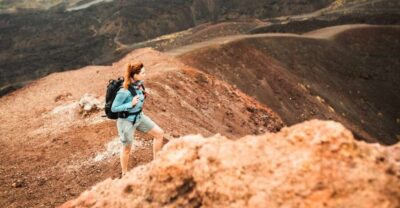
Mount Etna Trekking Tour Beyond the Tourist Trails
Read our review →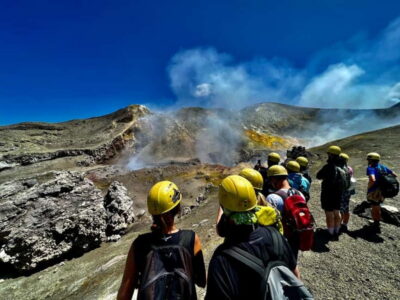
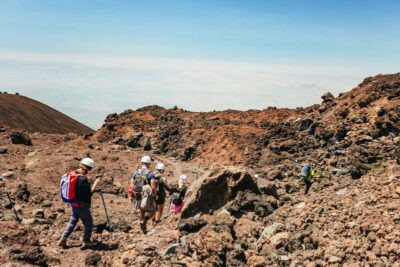
scenic Summit Trek with a volcano Guide and Gear
Read our review →
Browse the lists this tour appears in